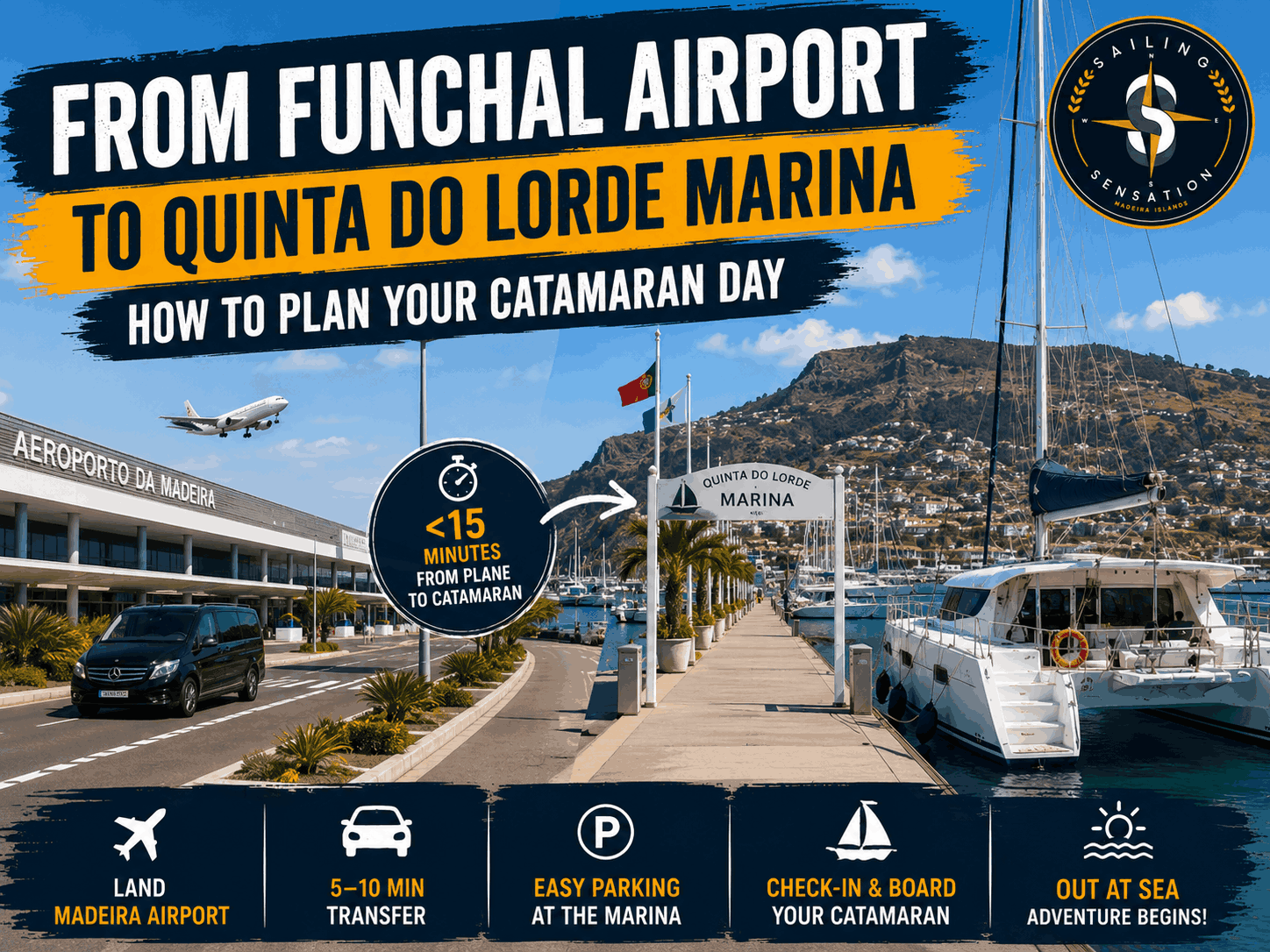
From Funchal Airport to Quinta do Lorde Marina: How to Plan Your Catamaran Day
Madeira is one of the few destinations where you can land at the airport and be on a catamaran in th...
Read MoreSelect Language
Service
Slot
Adults
Children (< 12)
This service requires special arrangements and may be subject to permissions and availability. To ensure we meet your specific needs, please get in touch with our team directly. Click below to contact us, and we’ll guide you through the booking process and help tailor the experience to your preferences.
08 May 2026
Madeira has one of the strongest cetacean (dolphin and whale) sighting records in Europe. But ask any local skipper "when's the best time to see them?" and the honest answer is: almost any time — it just depends which species you're hoping to spot.
Around 26–30 species have been recorded around the Madeira archipelago. Some are resident year-round. Others pass through on migration. A few are deep-diving specialists you can only realistically encounter in summer. This guide walks you through the year, month by month, so you can match your trip to the wildlife you most want to see.
Most whale-watching destinations rely on a short migration window. Madeira doesn't, and the reason is geography.
The seabed drops to over 1,000 metres within just a few kilometres of the coast. That means deep ocean — and the food chain that comes with it — sits unusually close to shore. Resident species like bottlenose dolphins and short-finned pilot whales can be seen virtually any month of the year. Migratory species cycle through on top.
Headline number: Madeira's catamaran operators report cetacean sighting rates of 70–90% across the year, with peaks in late spring and early autumn.
Sightings are never guaranteed (it's wildlife, not a zoo) but the odds are genuinely strong.
Two variables drive what you'll see:
Combined, they give Madeira two distinct cetacean "seasons" layered on top of the year-round residents.
January is quieter, both with tourists and with sightings. It's a real winter month — but a calm winter day off Funchal can still deliver excellent dolphin encounters and is wonderfully crowd-free.
Mid-winter. Same pattern as January. If you're visiting for the Festa da Flor preparations or simply because flights are cheap, a half-day catamaran can still be an excellent way to spend a calm afternoon.
The transition month. Conditions are generally better than February, days are getting longer, and the marina is starting to wake up.
April is when things really start. Migratory species begin showing up, and the Desertas tours typically resume operation. One of the best months for variety without summer crowds.
May is many local skippers' favourite month. Long days, calm seas, water warming up enough to swim, and a really diverse mix of species. Excellent for first-time visitors who want a strong chance of multiple sightings in one trip.
Peak conditions begin. Water comfortable for swimming, sea generally calm, and the deep-diving specialists like sperm whales become realistic targets on full-day trips towards the Desertas.
Peak summer. Beautiful conditions, warm water, but the busiest month at the marina. Book ahead.
The warmest water of the year. Snorkel stops are at their best. Wildlife is rich but boats are everywhere — another strong argument for a private rather than shared tour.
September is arguably the best single month of the year. The wildlife of August, the water temperature of August, but with smaller crowds, easier marina access, and softer light for photography.
Beautiful end-of-season month. Water still warm enough to swim. Sightings still strong. Excellent value in shoulder season.
Transition month back into winter. Half-day routes most reliable. Good chances on calm days.
The Christmas / New Year period brings a bump in visitors but rarely the calmest weather. Choose a half-day window with a good forecast and you can still have an excellent trip.
If a specific species is on your bucket list, here's where to start:
For the full species breakdown, see our companion guide: Dolphins & Whales of Madeira: 10 Species You Can See on a Sailing Sensation Catamaran Tour.
Within any given month, the morning generally beats the afternoon for cetacean encounters. Reasons:
If you have flexibility, book a morning departure. If your schedule only allows afternoon, you'll still have very good odds — just slightly different conditions.
Madeira takes wildlife protection seriously, and so do reputable operators. On a Sailing Sensation tour:
A well-run tour is good for the animals and gives you a longer, calmer, better encounter than chasing them ever would.
Once you know what you want to see, the trip type follows naturally:
If a specific species or month is on your mind, get in touch. We'll tell you honestly what's realistic for your dates, recommend a route, and build a tour that gives you the best possible chance of the encounter you came for.
Madeira is one of the few destinations where you can land at the airport and be on a catamaran in th...
Read MorePorto Santo is Madeira's quieter, sandier sister island — 9 km of golden beach and a pace of life th...
Read MoreLook south-east from Funchal on a clear day and you'll see them on the horizon: three jagged shapes...
Read More